Transformation Cases · Case 03 · Impacted canine
When the canine is not where it should be
An ectopic canine with a poor prognosis for alignment, and what can be done when traction is not the right answer.
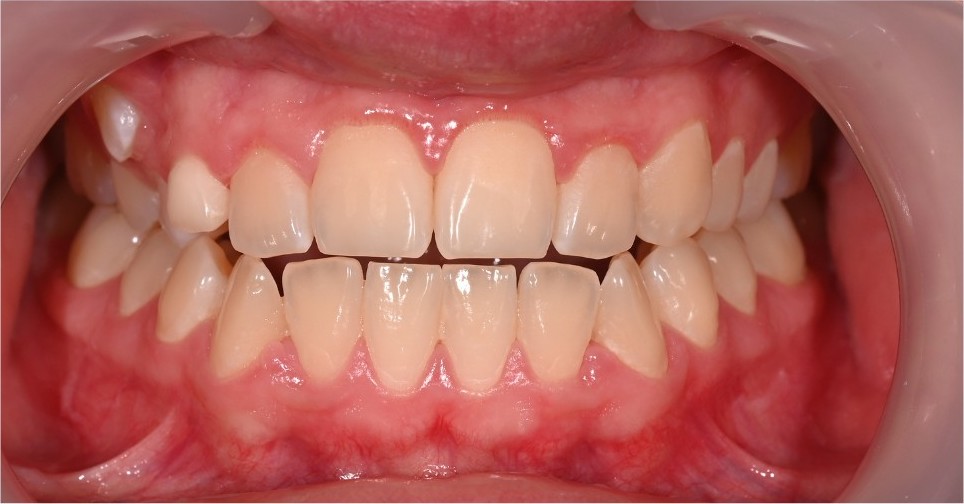
 Before
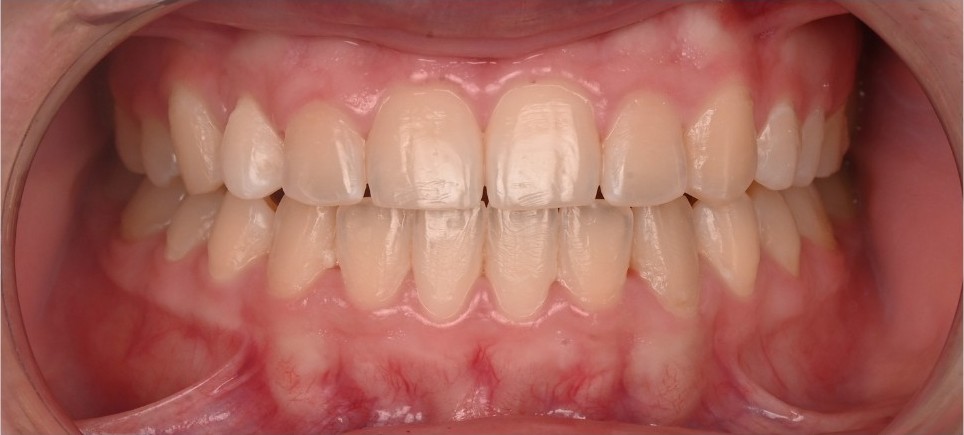
After
Before
After
The record
- Concern
- Ectopic canine with poor prognosis for orthodontic alignment
- Considered
- Orthodontic traction — ruled out on risk of resorption and displacement
- Approach
- Premolar substitution, with shape modification and occlusal adjustment
- Outcome
- Healthy functional bite and a natural-looking smile
Drag the register line to compare. Both frames are held at the same crop and scale, so the only thing that changes is the teeth.
What the treatment involved
Canines play a key role in both function and aesthetics. They guide the bite and support the smile. But they can erupt in the wrong position, or fail to erupt at all — impacted in the bone, ectopic, or severely displaced by crowding.
The ideal approach is usually to guide the canine into its correct position using orthodontic traction. That is not always feasible. Severe displacement, ankylosis, or a meaningful risk of root resorption to the neighbouring teeth can all make traction the wrong choice.
An alternative, in selected cases, is premolar substitution: the first premolar is moved into the canine position to take over its function and appearance. It is considered where the canine has a poor prognosis, where there is high risk of damage to adjacent teeth, or where the patient’s circumstances limit what treatment is realistic.
The work does not end with the movement. The premolar is reshaped so it looks like a canine, and the bite is adjusted so it behaves like one — mimicking canine guidance, and holding up over the long term.